
With every exercise we prescribe, there should be specific intention that leads to a meaningful adaptation. Prescribing bird dogs with the rationale of ‘core stabilization’ often leaves a lot to be desired.
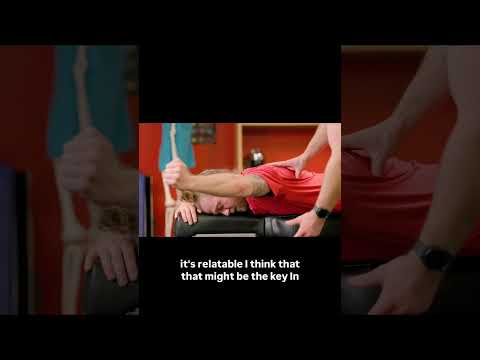
1. Pattern Recognition
2. Understand the real demands of your sport/life
3. Relatable communication
4. Being ‘pain free’ is not the same as being ‘prepared’.
5. Smarter decision making and better guidance.
6. Rehab IS training.
7. When the athlete/person is understood, confidence follows.
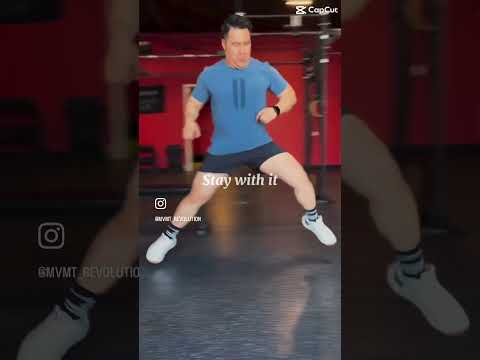
Most things don’t get ‘fixed’ with short-term, unsustainable changes. You need to give it time. You need to stay with it to see reliable, predictable, and sustainable improvement.

Get a plan that fits your presentation, your life, your needs, and your goals.

Movement Scaling: modifying aspects of a movement to match one’s current capacity, while largely retraining the overall purpose for performing the movement.

Athlete: anybody who endeavors to improve physical or metal qualities related to any sport or activity.
Encouraging every person to think of themselves as an athlete can have a massively positive impact on public health.


I use foam rollers all the time in rehab and training…but usually not for rolling on.

Resistance bands: often underloaded, and a non-uniform loading profile.
Here’s why I think you should usually opt for a cable instead.

Physical Therapy is the management of our vitality through movement, mindset, lifestyle, and connection with our body.

After completing a 100-mile run in 24 hours, Wes developed debilitating shin pain that temporarily sidelined him from normal movement. His rehab began with a short period focused on calming inflammation, restoring range of motion, and reactivating muscles through isometric exercises. As symptoms improved, training progressed to loaded, weight-bearing movements targeting strength, stability, and mobility. Before returning to running, a plyometric progression was introduced to prepare his body for impact and volume. Just five weeks later, Wes not only returned to running but completed all three races at the Spartan World Championships in one weekend—demonstrating a successful, well-managed recovery.

📍 Isometrics in Rehab
An isometric muscle contraction is when the muscle contracts but does not shorten or lengthen. Generally it involves producing force into an immovable object, or resisting movement through stabilization.
📈 Graded exposure to painful movement patterns and positions.
💪 Easy to track and progress through increasing force production and challenging different positions.
🎉Improve confidence and reduce pain.

🚨Return to sport reactive agility progression🚨
1. Planned Movement:
When your brain knows a movement is coming, it is better able to prepare your body to perform the movement. These drills make sure you’re able to perform a movement at a high level - done with intention and high intensity to maximize return. Needs to be done well before moving to reactive drills.
2. Unplanned Movement:
The difference between many drills and actual game play is reactivity. Mind-body connection is important here with a focus on coordination and accuracy, while sacrificing as little intensity as possible.
3. Unplanned Movement with Dual Tasking:
Forcing a diversion of your focus away from the movement pattern in order to simultaneously complete another skill. When retuning from an injury, it’s important to demonstrate the ability to move well subconsciously while performing another task, as that’s what will occur in sport.
4. Movement with Disruption:
Can you react when someone impedes or disrupts your movement? Improving body awareness and developing reactive correction strategies can help reduce the likelihood of injury. This also provides exposure and practice to landing in a variety of non-conventional positions.

Should your knees go over your toes?
If you are a human-being with expectations of doing anything even remotely athletic, then they absolutely should!
My client shown here is a high level skier. It is essential to regain strength and confidence in a positive shin angle (knee over toe) in order to return to the slopes at full participation.
I’m not sure where the fear-mongering for this movement pattern started, but like most demonized movement patterns, it’s just difficult and maybe even painful if you haven’t prepared your body to perform it.
There’s no inherently bad exercises or movements, just ones you’re not prepared for.
Not sure how to prepare your body for the demands of life and/or specific activities? We offer a free consultation call.

Shoulder pain at the bottom of a bench press? Something I’ve seen so many times, and this strategy rarely misses.
1. Pin Press: Utilizing a constraint to protect the painful range of motion allows you continue high effort pressing without increasing pain. This also provides a nice rehabilitative stimulus as well.
2. Rack Press Overcoming Isometric: Utilizing an isometric to improve positional and load tolerance is a game changer. Force production is guided by the individual, so you can take what your body gives you without overdoing it. After a performing this consistently, you’ll likely find that you can press harder with less pain in previously challenging positions.
3. A comprehensive rehabilitation program finds every opportunity to improve capacity. This strategy is most effective when it’s just a piece of the larger puzzle.


Why the key to unlocking your tight groin might be strengthening, not more stretching!


Your rehab should adequately prepare you for the activities you plan to return to. If you aren’t working up to and demonstrating a full go in rehab, we’re leaving the job unfinished and simply hoping that it’ll be alright.

Rehab is the interplay of building confidence while addressing vulnerability!

Progressive Loading Phase: The gradual reintroduction of mechanical stress to the involved tissue.
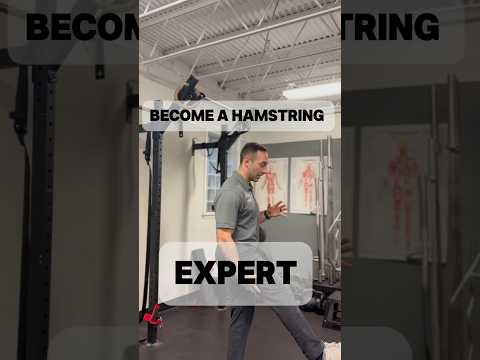
Everything you need to know about what the hamstrings do!
Check out my other videos on the hamstring rehab process.

The goal here is to restore full ROM (movement), and to directly stimulate the involved musculature at a tolerable level (ISOs).
