
Two areas that have been performance limiters for me in Hyrox, and I know I’m not alone:
- Holding run pace when the legs get heavy.
- Finishing strong on the wall balls.
Along with committing to becoming a better runner overall (should be #1 priority for MOST Hyrox athletes), repeating this session has allowed me to run more confidently on gassed legs, and not fear the wall balls when i’m still 3 stations away (I know you’ve thought about the wall balls on runs 5 and 6).
3-4 sets
800m run
50m sled push
800m run
40-50 wall balls
Rest 3 minutes between sets
*Runs should be at or faster than hyrox pace. If they are slow, you are blowing up on the sled.
*Aim to finish wall balls in 1-2 sets.
Give it a shot!
GOLFERS: Believe it or not, this type of session translates for you too! If you have a high level of aerobic power and muscular endurance, you can train/practice harder, recover quicker, and you’ll be more durable on and off the course.
(but yes, there are other ways to accomplish this with less Hyrox specificity).

“Golf Exercises”: Movement patterns that address important physical characteristics and qualities related to the golf swing.
The KEY: all of these movements build capacity and can be indefinitely progressed over time. They each have a clear intention and desired adaptation(s) in mind.
Check out the full video here:
https://www.instagram.com/p/DaL_yLWDXm6/?igsi=MWFqNm1wcDlzZGwzZg==

How do the Tour Pros warm up for their biggest rounds?
Arrive early. Proper nutrition. Gym routine to get mobile and fire up the nervous system. Hit some balls.
If you have the time to do it, here are some exercises you can do to fire up your nervous system.

WATERED-DOWN NONSENSE: an exercise that looks fancy, complex, golfy, or special - but in reality falls way short of providing a stimulus for adaptation.
Most often presents in the form of combination exercises - putting two things together and inherently limiting your ability to perform both.
I suggest you look at training this way:
Step 1) What are we trying to accomplish (hip rotational mobility, vertical pull strength and power, leg drive, etc)?
Step 2) What intervention(s) are most effective and appropriate for the individual, to create the desired adaptation.
Too many golfers have abstract goals, perform abstract exercises, and get abstract results.
I am launching a full blown attack on golf training culture, unnecessary complexity, and downright ineffective exercises for both golf and life.


Curious about knee sleeves? Here’s what you need to know:

By simply adding a few sets of jumping/throwing/plyos before your strength work, you can add meaningful power / athletic development with just a few extra minutes on each movement. Some might even claim it can ‘prime’ your nervous system to lift heavier.
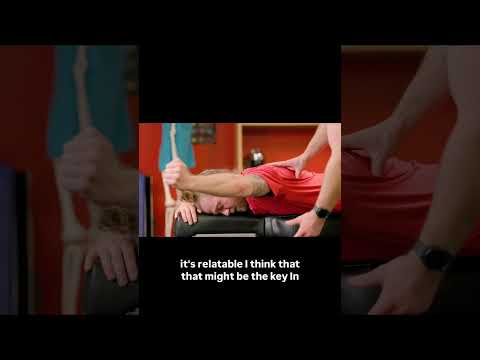
1. Pattern Recognition
2. Understand the real demands of your sport/life
3. Relatable communication
4. Being ‘pain free’ is not the same as being ‘prepared’.
5. Smarter decision making and better guidance.
6. Rehab IS training.
7. When the athlete/person is understood, confidence follows.
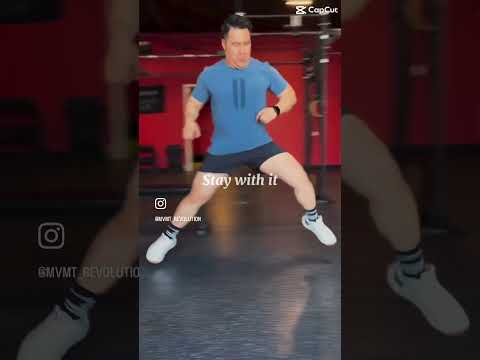
Most things don’t get ‘fixed’ with short-term, unsustainable changes. You need to give it time. You need to stay with it to see reliable, predictable, and sustainable improvement.

Movement Scaling: modifying aspects of a movement to match one’s current capacity, while largely retraining the overall purpose for performing the movement.

Athlete: anybody who endeavors to improve physical or metal qualities related to any sport or activity.
Encouraging every person to think of themselves as an athlete can have a massively positive impact on public health.

Do you workout to support your golf game? What does a ‘golf workout’ even look like?
I think for most of us, it should be something that focuses on developing overall strength, power, balance, and conditioning, with considerations for the movement profile of a golf swing, merged with individual needs and goals. To drive adaptations that improve performance and longevity on and off the course.

Both of the following statements about warm-ups are true:
Warming up is important. Effective warm up routines have been shown to reduce injury and improve performance.
Excessively long warm up routines are not a good use of your valuable time dedicated toward your fitness.


I use foam rollers all the time in rehab and training…but usually not for rolling on.


Training your hip flexors through a full range of motion can be a game changer.

Resistance bands: often underloaded, and a non-uniform loading profile.
Here’s why I think you should usually opt for a cable instead.

Physical Therapy is the management of our vitality through movement, mindset, lifestyle, and connection with our body.


If I had to choose just one exercise for runners, it would target the calf and Achilles complex, which plays the largest role in running propulsion. By increasing Achilles tendon stiffness, the tendon’s elastic properties improve, creating a more spring-like effect during running. This enhanced elasticity helps runners generate force more efficiently, contributing to better performance and potentially reduced injury risk.

🚨Return to sport reactive agility progression🚨
1. Planned Movement:
When your brain knows a movement is coming, it is better able to prepare your body to perform the movement. These drills make sure you’re able to perform a movement at a high level - done with intention and high intensity to maximize return. Needs to be done well before moving to reactive drills.
2. Unplanned Movement:
The difference between many drills and actual game play is reactivity. Mind-body connection is important here with a focus on coordination and accuracy, while sacrificing as little intensity as possible.
3. Unplanned Movement with Dual Tasking:
Forcing a diversion of your focus away from the movement pattern in order to simultaneously complete another skill. When retuning from an injury, it’s important to demonstrate the ability to move well subconsciously while performing another task, as that’s what will occur in sport.
4. Movement with Disruption:
Can you react when someone impedes or disrupts your movement? Improving body awareness and developing reactive correction strategies can help reduce the likelihood of injury. This also provides exposure and practice to landing in a variety of non-conventional positions.

Check out three of my favorite shoulder exercises to improve golf performance!


Try this simple exercise complex to target some important but overwhelmingly undertrained muscle groups!

Grip strength is a good metric to gauge total body strength.
Grip strength also has a strong correlation with longevity and quality of life in aging populations.
We can confidently say that building overall strength and muscle tissue is a key to longevity.

Accessory movements, such as direct rotator cuff training, are frequently underloaded. Start treating them like your main lifts to drive real physiologic adaptation.

Training explosiveness mitigates the age-related decline in power.

